DOJ Charges Southern Poverty Law Center Over Use of Snack Foods as Payment for Informants
By Lyle 'Leaky' McSpleen (Humid Data Closet) — Wed, 22 Apr 2026 04:06:24 GMT
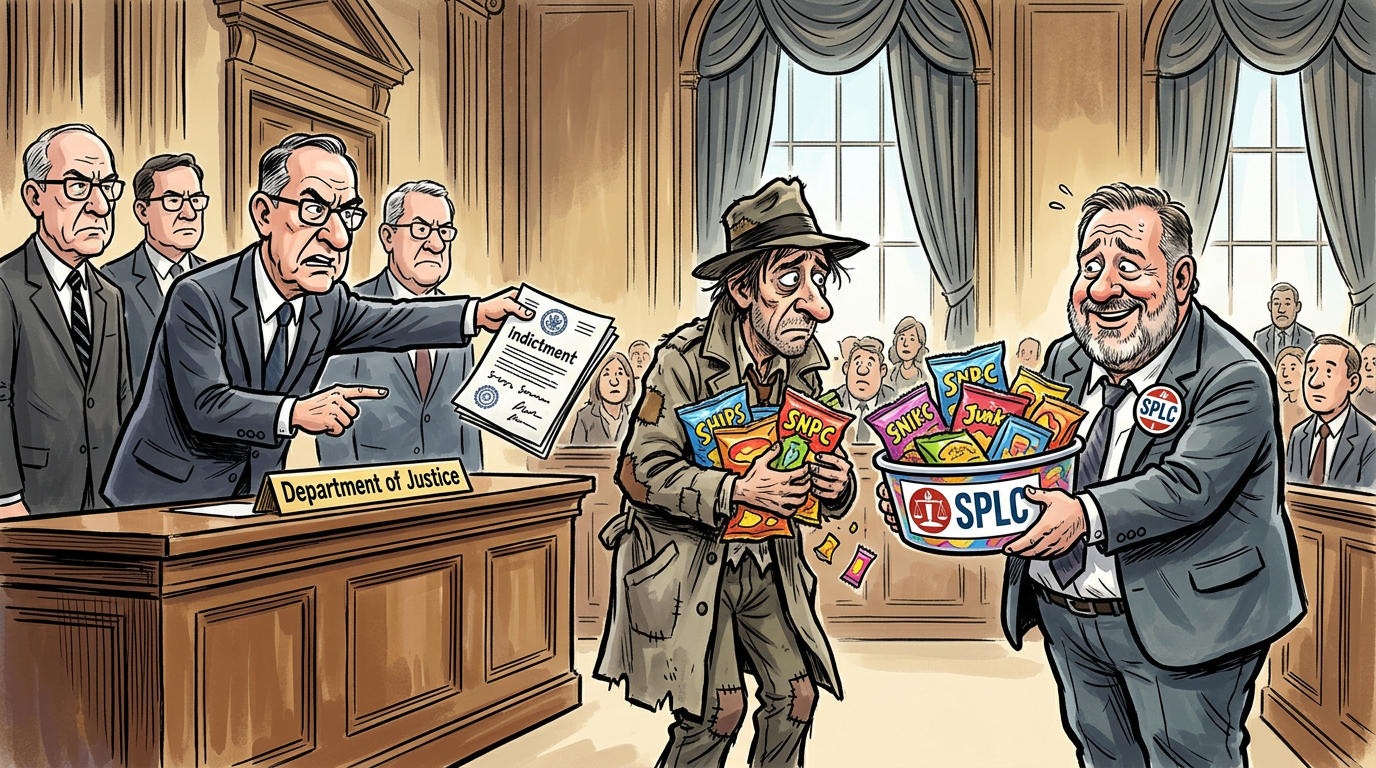
Federal prosecutors allege the powerful civil rights group destabilized the snack economy by hoarding spicy corn chips to trade for intelligence on extremist knitting circles and competitive dog-walking cells. Officials now face a logistical nightmare after several agents allegedly "consumed the evidence."
"“You try getting a Gen Z podcaster to betray his entire Discord server for a federal check that takes six weeks to clear. A bag of Flamin’ Hot Limón at 2 AM is the only currency that carries moral weight anymore.”" — KEY SLUDGE FINDING
In a stunning 47-page indictment unsealed Wednesday, the Department of Justice has charged the Southern Poverty Law Center (SPLC) with orchestrating a vast, underground informant economy fueled entirely by weaponized Frito-Lay products. For eighteen months, investigators allege, the civil rights nonprofit bypassed the U.S. Treasury, instead paying its sources with bulk shipments of Flamin' Hot Cheetos and pallet-loads of expired Baja Blast Mountain Dew.
The investigation, codenamed Operation Zesty Mordant, was triggered after a high-ranking mole inside a radical lawn-dart league attempted to deposit three kilograms of what he termed "purified orange flavor-dust" into a Bank of America ATM. Federal agents swiftly uncovered a sophisticated logistics network of dented Ford Transits ferrying snack foods to secure drop sites in exchange for screenshots of seditious chatter from private Discord servers and extremist knitting circles.
"The SPLC successfully infiltrated several competitive dog-walking cells and suburban garden syndicates using nothing but a bag of Takis and the promise of a moderately functioning air conditioner," confirmed Special Agent Glen Gristle of the DOJ’s newly formed Bureau of Snackable Assets. "They avoided our conventional tracking methods, but the telltale orange fingerprints on every subpoenaed document became difficult to ignore."
Economic analysts suggest the SPLC’s strategy was a masterstroke of financial subversion. By pegging the value of intelligence to the street scarcity of limited-edition "Xxtra Flamin' Hot" variants, they created a volatile but lucrative market that made the FBI’s standard cash bribes look like "participation trophies." One informant, speaking on the condition of anonymity in exchange for a Fun Size bag of Funyuns, noted the SPLC offered a superior "flavor-to-risk ratio."
"The Feds offer you a per diem that barely covers gas," the source explained while nervously checking over his shoulder. "The SPLC offers you a Zesty Mordant mouthfeel that lingers for days. It’s simply a different value proposition for the modern dissident."
In a defiant statement, the SPLC insisted the snack payments were a "cultural necessity" for contemporary intelligence gathering. "You try getting a Gen Z podcaster to betray his entire Discord server for a federal check that takes six weeks to clear," the release stated. "A bag of Flamin’ Hot Limón at 2 AM is the only currency that carries moral weight anymore."
At press time, the DOJ’s case was reportedly in jeopardy after several junior analysts tasked with cataloging the evidence accidentally consumed Exhibit A-4: "one (1) family-sized bag of Cheetos, XXTRA Flamin' Hot." In response, the SPLC has filed a blistering defamation countersuit, claiming the inventoried snacks were actually Cool Ranch Doritos and that the government’s gross misidentification of the flavor profile constitutes "flavor-based libel" and demonstrates a clear institutional anti-Dorito bias.